
THE MOMENT BEFORE
Generative film
The most-filmed moments in history, and the private minute before each one that no camera caught. Generated in color, cut against the real footage, blended until the seam is the point.
- Role
- Creative / Generative / Edit / Sound
- Stills
- Nano Banana Pro · GPT Image 2
- Motion
- Seedance
- Finished in
- Premiere Pro · Topaz Video AI
- Year
- 2026
History keeps the moment. This is the minute before it.
The moments themselves are the most-watched clips ever shot: one angle of a sprint, one reel of a takeoff, one broadcast frame of a boot, replayed for generations. But the minute before each one belonged only to the person inside it. Nobody filmed any of it, because nobody knew yet. They were not icons in that minute. They were people, alone with the thing they were about to do.
The Moment Before films that minute. Each one reconstructed with generative tools and shot like contemporary cinema, in color, because that is how they lived it. We remember it in black and white; they did not. Period lives in the content, never in the capture. And when each minute runs out, the film hands the frame to the real archival footage, exactly as it exists, grain and all. The collision is the meaning.
This is what generative video is actually for. What the generated camera gets to do is stand where no camera stood: inside the tunnel, behind the desk, in the cockpit at altitude.
Transparency
Every face you can name in this film is real. The generated material shows hands, backs, breath, a jaw in profile, never a recognizable face; every face you can put a name to arrived with the archival footage, exactly as the cameras of the day caught it. Every generated shot reconstructs a documented minute from reference images and text prompts. None invents an event, and none of this footage was used to train or fine-tune any model.
Archival: Universal Newsreel coverage of Amelia Earhart’s 1932 transatlantic takeoff and of Jesse Owens at the 1936 Berlin Games (US government collection); The March (James Blue, USIA, 1964), preserved and restored by the National Archives; the Apollo 11 broadcast (NASA).
The worlds
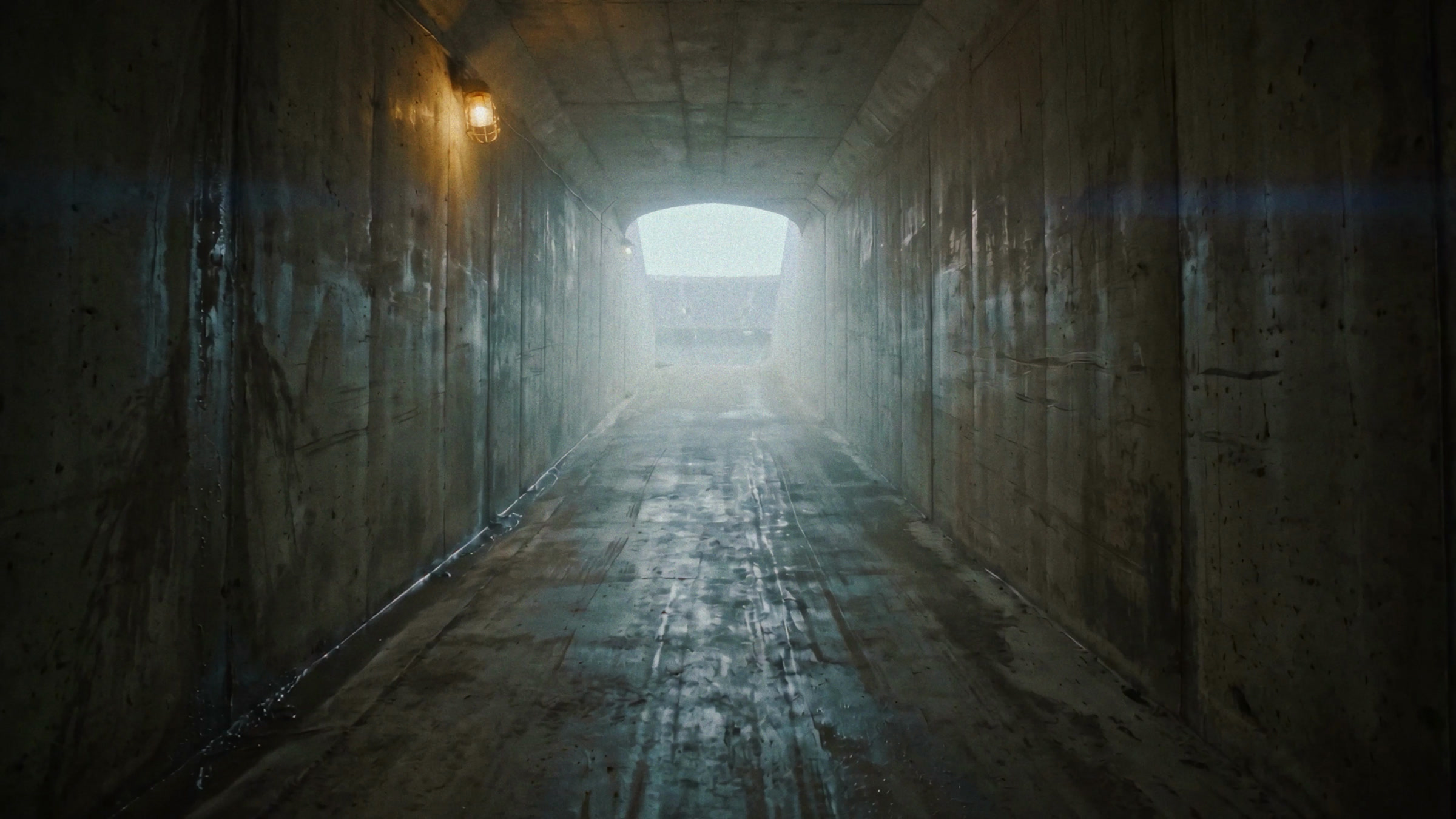
OWENS, 1936. The tunnel under the Olympiastadion. A lace, a foot in a hand-dug hole, the walk toward the light.
KING, 1963. The Willard at 4am. Draft pages without the dream on them, the pen, the curtain gap.
EARHART, 1932. Harbour Grace at golden hour. Sealed into the Vega, the goggles, the throttle, the roll.
APOLLO, 1969. The hinge. The descent runs under the whole film.
The rules
Every one of these was earned.
1. Only film what history failed to film. That is why there is no Saturn V launch in this film.
2. No generated likeness, ever. The only faces in this film arrived with the archival.
3. Inhabit documented moments, never invent them.
4. Dock every seam. The seams are freeze-frameable, and the answer key below is public.
5. Sources in the open. Public-domain backbone, sources and tools credited below.
The seams
The seams are the honesty test, and they are left findable on purpose. Each generated world ends on a docking frame built to match its archival landing: same geography, same light, same blocking. Some of the reverse angles inside the real moments are generated too, so the blend runs in both directions. Here they are, side by side. Pause anywhere.
Fingers on the line beside the real race.
The Vega’s rear push beside the real 1932 takeoff.
The podium from behind beside the real podium.
The boot on the ladder beside the broadcast frame.
The craft
Every shot ran the same chain: reference pull, then character, prop, and location kits, then a seed still, then image-to-video, then take selection, then the trim. Masters ran five to eight seconds and entered the cut at one to three. Generate long, cut short.
Locations were locked from above before any eye-level frame was generated: a photoreal overhead survey first, then a master wide from the overhead’s own side, then child views referencing both. Two wides generated independently will draw two incompatible rooms; spatial truth is established once, from above.
Real artifacts got edited, not regenerated. The LM cockpit, the Owens shoe, and the Vega interior are restored and relit photographs of the actual objects. Where no usable photography existed, it was manufactured: the Smithsonian’s 360 degree scan of Earhart’s actual Vega was re-projected into rectilinear plates to serve as the only workable interior reference available.
And a coverage shot entered this cut only by naming the shot it killed.
Four worlds, forty-three shot folders, one cut.
Six laws came out of this production, each paid for with a failed generation:
1. The reference owns placement. Attach a reference image and then also describe where things go, and the two instructions fight; the model settles the fight by rearranging everything.
2. The real object beats the old photo. Period black-and-white film lies about color. Earhart’s flight suit reads near-black in the 1932 press photos; the actual suit, preserved at the Smithsonian, is honey-tan.
3. Never name what you don’t want. Write “no tie” and ties appear, because to a model every word is a request, including a banned one.
4. Describe motion the camera can verify. “She opens the throttle” gets satisfied by the smallest gesture that technically counts, a touch, a nudge.
5. Kill the pretty adjectives. The generated footage kept coming out looking like a soap opera, and the culprit was the prompt itself: “glowing,” “luminous,” “dreamy.” Deleting those words did more for the image than any color grade.
6. Shorter prompts win. Piling on constraints reads as noise; say less, mean all of it.
The research got the same discipline. There were no starting blocks in 1936; sprinters dug footholes in the cinder with a trowel, so the film digs one. The Berlin start was two commands and the gun. Apollo 11 flew the descent fully suited and gloved. The A7L helmet sweeps breath fog clear in about a second, so the fog in this film blooms and sweeps. Dr. King’s 2.5 inch March lapel pin was reproduced from a scan after every generated version got it wrong. Earhart wore no necktie when she actually flew.
Stills by Nano Banana Pro and GPT Image 2. Motion by Seedance. Upscaled in Topaz. Edited and finished in Premiere Pro. Music licensed via Artlist. Sound designed and placed by hand. Directed, generated, and edited by Eric Hsiao. HARD8, 2026.
All original IP · Made under these principles